
THE ART OF SANCTUARY
Written by: Prinitha Govender | Creative Director at Skripture
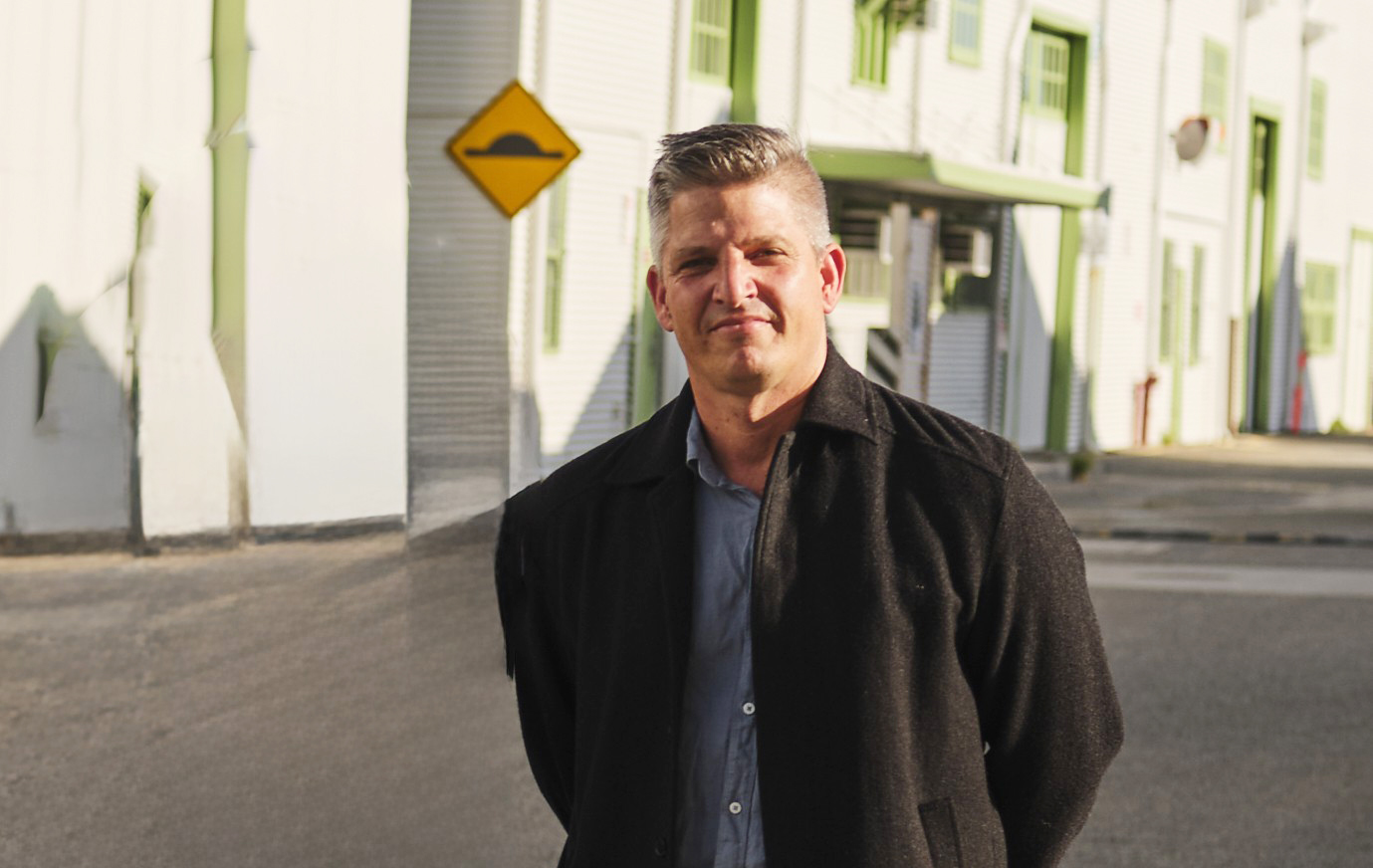
As Fremantle prepares for the fifth edition of its acclaimed site-responsive festival, the Fremantle Biennale, the port city once again becomes a stage for art that listens – to land, to community, to change. This year’s iteration, titled SANCTUARY 25, invites audiences to consider what sanctuary means in an era of uncertainty and transformation. Across beaches, laneways, warehouses and waterways, artists reimagine the idea of refuge as something living, porous and collective. At the centre of it all stands Tom Mùller, the Biennale’s co-founder and artistic director, whose vision has helped shape Fremantle into one of Australia’s most compelling laboratories for site-based art. In my conversation with Mùller, he reflects on the poetics and politics of sanctuary, the responsibilities of curating on Whadjuk Noongar land and the evolving relationship between art, place and community.
Sanctuary. Just saying the word feels like stepping into a quiet, protected space. Derived from the Latin word sanctuarium, meaning “sacred place”sanctuary originally referred to a walled place, a temple or a shrine, where the sacred was kept safe. By the middle ages, sanctuary came to mean a place of asylum, where the vulnerable could seek protection. Today, it’s expanded again – sanctuary can be a shelter for humans, for animals, for cultures, or even for ideas – whether it’s a wildlife refuge, a city safe house, or a quiet corner of your own home. Sanctuary has evolved to be much more than a word; it’s a promise, a reminder that amidst chaos, there are spaces, both real and imagined, that shelter, protect and restore. The concept of sanctuary is precisely what is being pulled apart and deconstructed by artists at this year’s Fremantle Biennale SANCTUARY 25.
THE ARTISTS’ BRIEF
The brief the artists received for SANCTUARY 25 was to probe the concept of sanctuary and to examine and expose some of the workings of it in ways that we perhaps haven’t seen before, according to Mùller. “Active communities, active shaping and making is very much what we’re interested in seeing, which is yet to be explored as people go through the event themselves,” he explains.
“There’s so many different ways of coming at this and I think the more protagonists, the more participants you have, will shape out how this year’s space will become and I think for us it means how you bring a sense of self to a place like Walyalup, Fremantle that already feels like a museological sanctuary, a very deeply rooted community, a connected and engaged village and so coming into that as an artist that can sometimes be tricky.”
FREMANTLE AS SANCTUARY
Fremantle has long been considered a sanctuary – a coastal haven where creativity and community thrive side by side. With its mix of historical architecture, ocean air, a deep sense of local pride and a richly layered cultural mix, Fremantle offers a kind of calm that’s increasingly hard to find in today’s fast-paced urban life. Artists, musicians and wanderers have long gravitated here, drawn by its openness and its unpolished beauty.
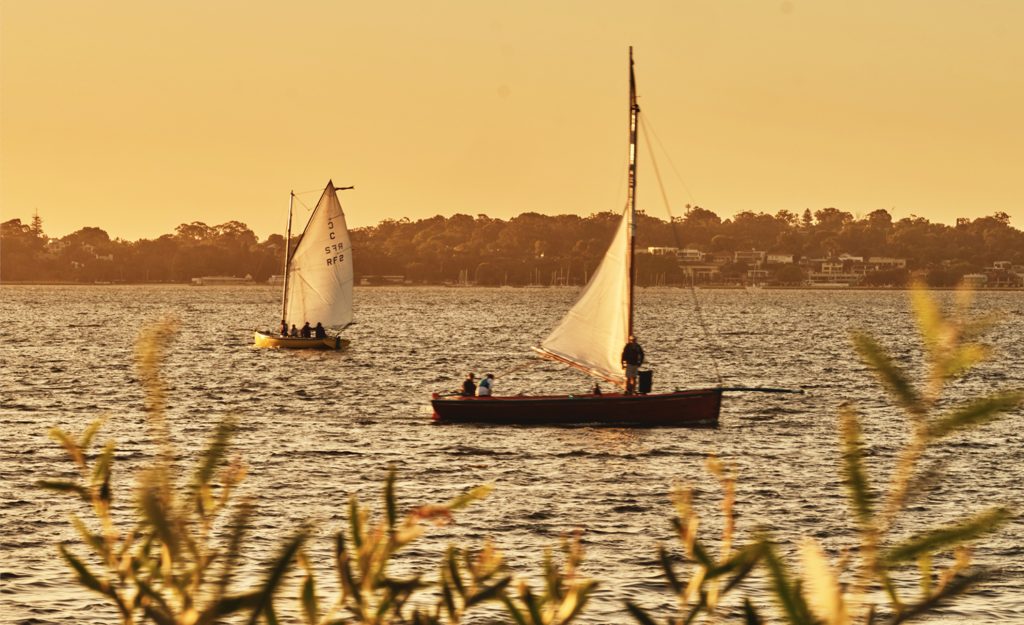
Looking at the public spaces of Walyalup Fremantle, the historic buildings, its shorelines, community kitchens, shipping containers and the ambient landscape of the city itself, the heritage town seems to be the ideal stage for SANCTUARY 25. “We’re leveraging what’s already there,” says Mùller. “We’re not bringing anything new to the city of Fremantle. We’re augmenting Fremantle as a sanctuary through artistic events, through other public events and forums. We’re basically highlighting what Fremantle already is and making it visible, really visible, for a three-week moment.”
In fact, the vibrant presence of the Fremantle Biennale in Fremantle has become a compelling drawcard for people relocating to the seaside town. “Many people have moved here because of the Fremantle Biennale, which I only discovered recently, which is amazing. People have come back, wanting to live here because of Satellites and Nonotak from the previous year’s program. They’ve come here because they’ve sensed that solidarity and connectivity and the idea of bumping into someone that you may know every other day, but also discovering new people, is so strong.”
“I think for me it’s about capturing all of these things that make you feel both, safe and comfortable in, but also a place that you feel stimulated in. You will make new discoveries, you’ll have new collisions and encounters and I think that, together, makes Fremantle one of the most compelling places to live in.”
The rich and vast tapestry of Fremantle is undeniable. With Fremantle Ports handling 99% of WA’s container trade, it maintains a real sense of influx. There are also rich layers of immigration that is the bedrock of this place over the years. The Sicilian communities from Syracuse, for example, still speak a dialect that is defunct back in Sicily, but is still alive here, in Fremantle. Some of these elements are highly fascinating.
THE DARK SIDE OF A CULTURAL MELTING POT
But, there is a darker side to this rich tapestry. As Fremantle’s appeal has grown, so too has the pressure on the very people who gave the city its cultural soul. Rising property prices and redevelopment have begun to edge out the musicians, artists and independent creators who once defined the town’s character. The warehouses that hosted gigs and exhibitions are being converted into apartments; the cheap studios and shared homes that nurtured new ideas are harder to come by. There’s a quiet irony in seeing the city’s creative spirit celebrated in brochures and branding, even as the artists behind it are forced to move further afield in search of affordability. It’s a familiar story in many cultural hubs and one Fremantle now finds itself reckoning with, one the Biennale is actively fighting to protect against.
“Now what we’re seeing, which is a little unfortunate, is the gentrification of Fremantle that has become such a destination, that the people who live and work in this place and who make it interesting, are being pushed out to the fringes like Hamilton Hill and Spearwood, who can no longer afford to live in Fremantle,” explains Mùller. “That’s something that this festival is actively fighting against – to make sure that the living fabric and the kind of pulse and soul of this place needs to remain alive and thriving and for that we need festivals that question the way we, you know, we need things to be alive and shifting and risky and thought provoking.”
“We don’t want another Chelsea and London,” he explains. “We don’t want that. So it’s really important that we keep pushing the fabric and we keep making it porous and permeable in some ways, permeable in different ways, but what we don’t want is every Tom, Dick and Harry with their Teslas down here, thinking Fremantle is the place where they can just come and indulge. This is a living melting pot. Fremantle is like a lab for ideas.”
ACCESSIBILITY AND OPENNESS
In an age when ticketed exclusivity often defines the art world, Fremantle Biennale stands apart by being a largely free event. This accessibility isn’t an afterthought; it’s at the heart of the Biennale’s philosophy. By stripping away financial barriers, SANCTUARY 25 invites everyone – locals, visitors, the curious and seasoned art lovers alike, to step into a shared space of creativity and discovery. “That’s very much part of our fabric – that openness and accessibility to all members of the community. Having very few ticketed events is largely thanks to our funders, our benefactors and philanthropists – it’s how we make all of these things free.”
This inclusivity helps foster a deeper connection between artists, audiences and the city itself, transforming public spaces into platforms for shared creativity and dialogue. The emphasis on free participation demonstrates the Biennale’s belief that art should be a communal experience – open, engaging and accessible to all, strengthening Fremantle’s identity as a vibrant, welcoming hub for contemporary art and cultural exchange.
TRACES AND TRANSFORMATIONS OF SANCTUARY 25
The most compelling artwork at this year’s Fremantle Biennale, according to Mùller, is not a monument or a big piece of public art – it’s the collective experience of the people that will come to this festival and have encountered magical moments and conversations with art, with response to a particular site or location.
“It’s those mementos, those site-responsive mementos, that you take away and reflect upon Fremantle as a place that is perhaps different to what we imagined it to be,” he explains. “It’s not just a place where you go and have fish and chips or where you see the big ferris wheel – there’s actually much more. I think we’ve invited the artists to really dig deep into that and our hope as a team is for people to leave this place and having them feel like they’ve been re-enchanted.”
HOW TO NAVIGATE THROUGH SANCTUARY 25
So, how should one navigate through the myriad of artworks and performances on offer at this year’s festival? The best way to approach SANCTUARY 25, according to its artistic director, is to perhaps begin by having a look at the program online and mapping your day out. “Allow yourself a day to do a bit of a walking journey and exploring, which can be done individually or with tour guides from the organisation, and by going from site to site and taking the time to absorb the work.”
Being a bit adventurous in your approach is also highly recommended, perhaps going to a late night sound sauna and then having a meal in the community kitchen afterwards. “Be a bit experimental. I think there should be a lot of self determination and self shaping – make it something that works for you. You don’t have to be this passenger in this. An activate participant is what we’re looking for.”
Fremantle Biennale’s SANCTUARY 25 will run over three weeks, from 13-30 November 2025. As you wander through the city’s waterways, heritage sites, streetscapes and alleyways going from site to site, take a moment to pause, a collective breath and let SANCTUARY 25 wash over you and work on you a bit like a herbal tea, like an infusion, to slowly permeate you. Take that away as a gift and cherish it. Give yourself time to really journey through it.
This editorial was created for Fremantle Biennale by Skripture