
ROOM SERVICE AT P&O HOTEL
Welcome to Wonderland: Artists Transform the P&O Hotel
Written By: Prinitha Govender | Creative Director at Skripture
Over the weekend, Fremantle’s west-end P&O Hotel transformed into something entirely unexpected: a stage for imagination, curiosity and the uncanny. Room Service, the latest site-immersive art installation presented by the Fremantle Biennale and the Fremantle Culture Council as part of the closing weekend of SANCTUARY 25 invited audiences to step inside and experience blurred lines between reality and art, the familiar and the fantastical.
Once filled with travellers, stories and late-night murmurs, the P&O Hotel has for the last few years stood quietly still, waiting, it seemed, for something to reawaken it. That awakening arrived over the weekend, 29 to 30 November 2025, when the historic and dormant building shed its familiar skin and opened itself to a world of imagination for all who dared to step inside.
Curated by Fremantle Biennale’s artistic director Tom Mùller and creative producer Odetta Davison in collaboration with artist and musician Danielle Caruana, Room Service brought together a diverse group of artists, performers and musicians, each invited to inhabit one of the 32 rooms of the P&O Hotel. Their brief was simple yet daring – respond to the layered history of this iconic building and in doing so, awaken its sleeping stories for all who entered.
Walking into Room Service felt like stepping straight into my favourite childhood storybook, Alice in Wonderland. It was as if I had tumbled down a rabbit hole into a world of fantasy, a touch of madness and unexpected beauty. The installation’s genius lay in its ability to take a commonplace environment, the P&O Hotel, and transform it into a canvas for storytelling. A building layered with decades of Fremantle history, the P&O Hotel stood as both host and protagonist. Patinated and rich with character, it opened its rooms once more, not to travellers, but to imagination. What could have been a series of tired old rooms with weathering carpets, became a labyrinth of experiences, each curated with meticulous attention to detail. It was intimate yet expansive, some parts surprising, yet some, strangely familiar, echoing Fremantle’s unique cultural pulse.
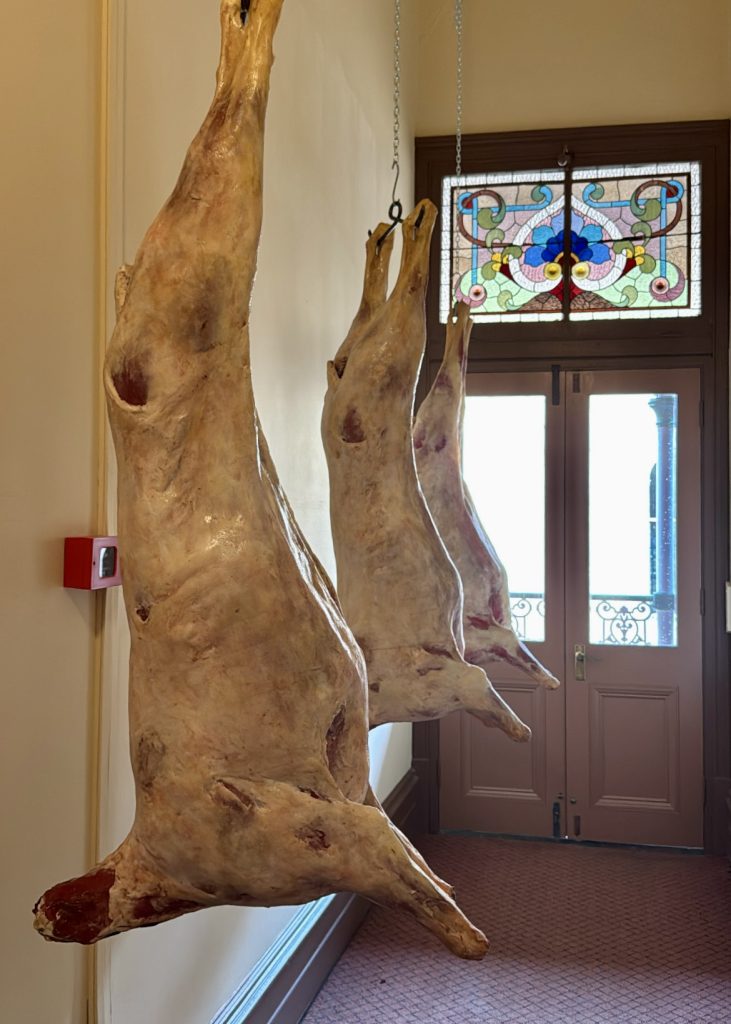
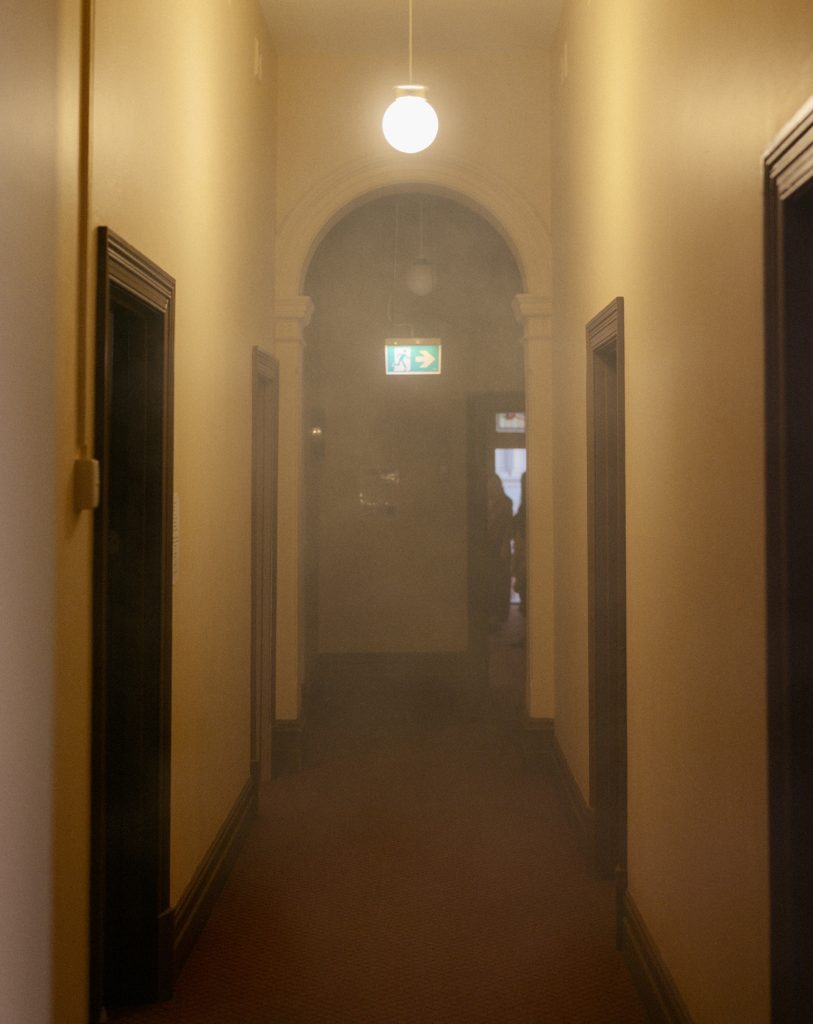
From the moment I entered, familiar rooms and hallways dissolved into dreamlike landscapes. Each corner revealed something whimsical, surreal or slightly disorienting, yet threaded with the quiet memory of the hotel’s history, the whispers of past guests, the patina of decades-old wood, the echo of Fremantle itself embedded in every wall. Each corner of the installation encouraged exploration, inviting visitors to linger, question and to participate in the unfolding narrative.
The Hengequeens Choir in Room 1 sung like angels continuously for four straight hours over two nights, giving visitors a moment to pause, breathe and observe. Irene Schneider’s Clay Mediation in Room 3 was a restorative work of art, handing balls of wet clay to participants who were invited to sit around a shrine of previous participants’ claywork in contemplation, while they created clay mouldings of their own. The experience was simple, yet highly immersive in its textured experience of the four senses – sight, smell, sound and touch. Ai-Ling Truong’s Tea Meditation in Room 19 touched on the same notes, adding a fifth sense to the mix – taste. An infusion of tea, the traditions, the sit down and the tea lesson itself was a charming juxtaposition to the remainder of my experience of Room Service.
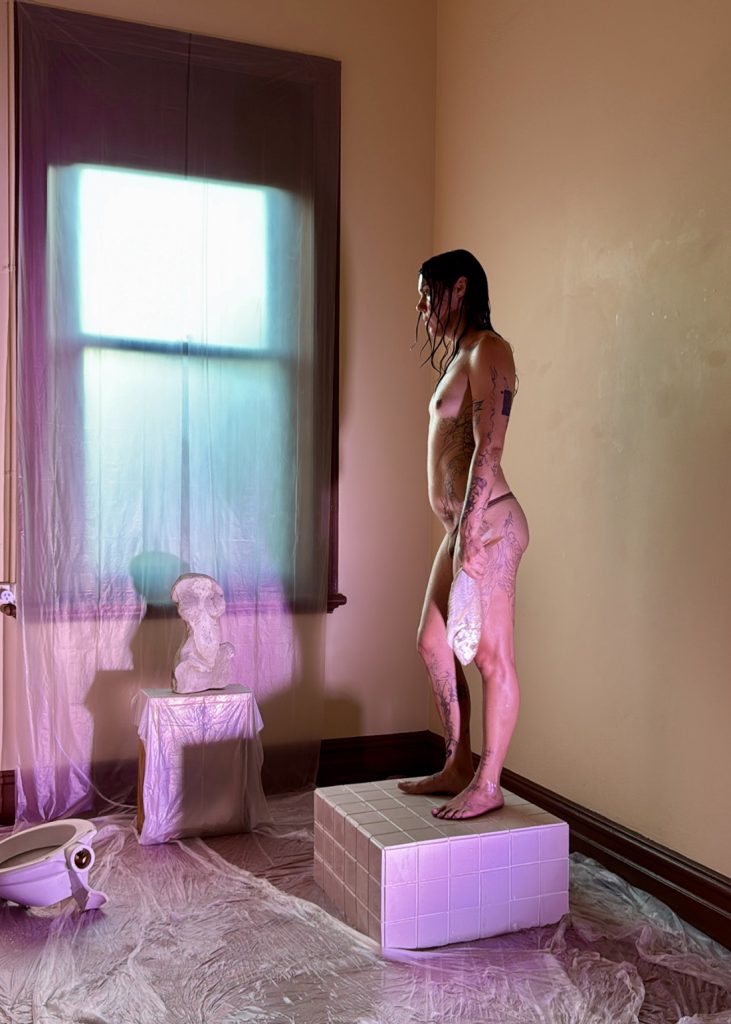
In Room 12, Mossy Jade commanded attention in a piece that was at once intimate, raw and deliberately confronting. Standing on a small makeshift stage, clad only in a nude thong, Jade held a dead silver fish while a head sculpture and a porcelain urinal lay scattered across a plastic-covered floor. The scene was unapologetically Duchampian in its readymade provocations, yet it carried a distinctly contemporary performative edge, blurring the line between object, body and audience. There was something disquieting and compelling in the tension of the room: the nudity, the unexpected arrangement of objects and the vulnerability of the performer all demanded attention, reflection and a confrontation with ideas of identity, gender and the human form. The piece was simultaneously playful, absurd and unsettling, leaving the viewer oscillating between fascination and discomfort – a true embodiment of immersive art that refuses to let its audience remain passive and a performance that lingered long after the room was left behind.
Kimberly Parkins’ installation in the hotel’s Laundry Room, while literal in its recreation of a laundry space, was an unexpected delight. With the artist at the ironing board, fully immersed in the quiet ritual, it transported me back to a bygone era, evoking memories of mothers and maids carefully tending to the family’s clothes – a domestic scene rendered almost magical in its intimacy and attention to detail. It was a sight to be savoured and a gentle homage to everyday life imbued with warmth and nostalgia.
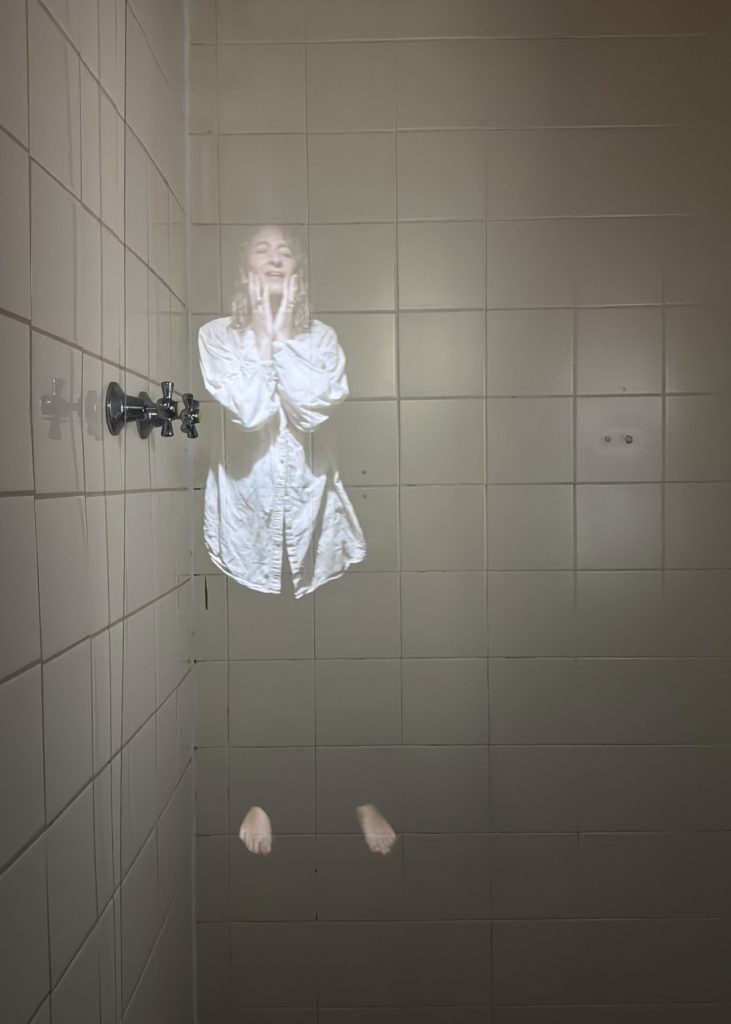
Another standout was Danielle Caruana and film maker Luna Laure’s bathroom installation, which seemed to capture the hotel’s own dreamlike imagination and masterfully fulfilled the artist brief. The immersion with ghost-like reflections shimmering in the shower and mirror initially disoriented me, then drew me into fascination and quiet wonder. Playful, eerie and bizarrely beautiful, the piece perfectly mirrored the strange enchantment of a long-dormant hotel come alive, evoking a sense of folklore or lingering spirits inhabiting the corridors and bathrooms. Ellen Broadhurst’s Room 15 immersion was quietly captivating. I found myself lingering, drawn to the striking contrast between the large sculpted head on the wall and the shifting digital projections that played across the space.
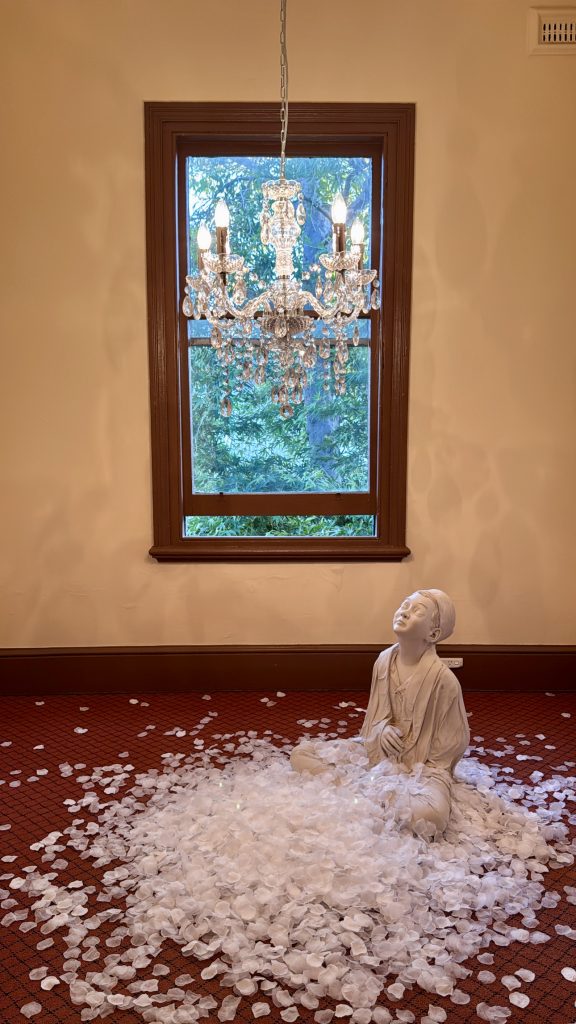
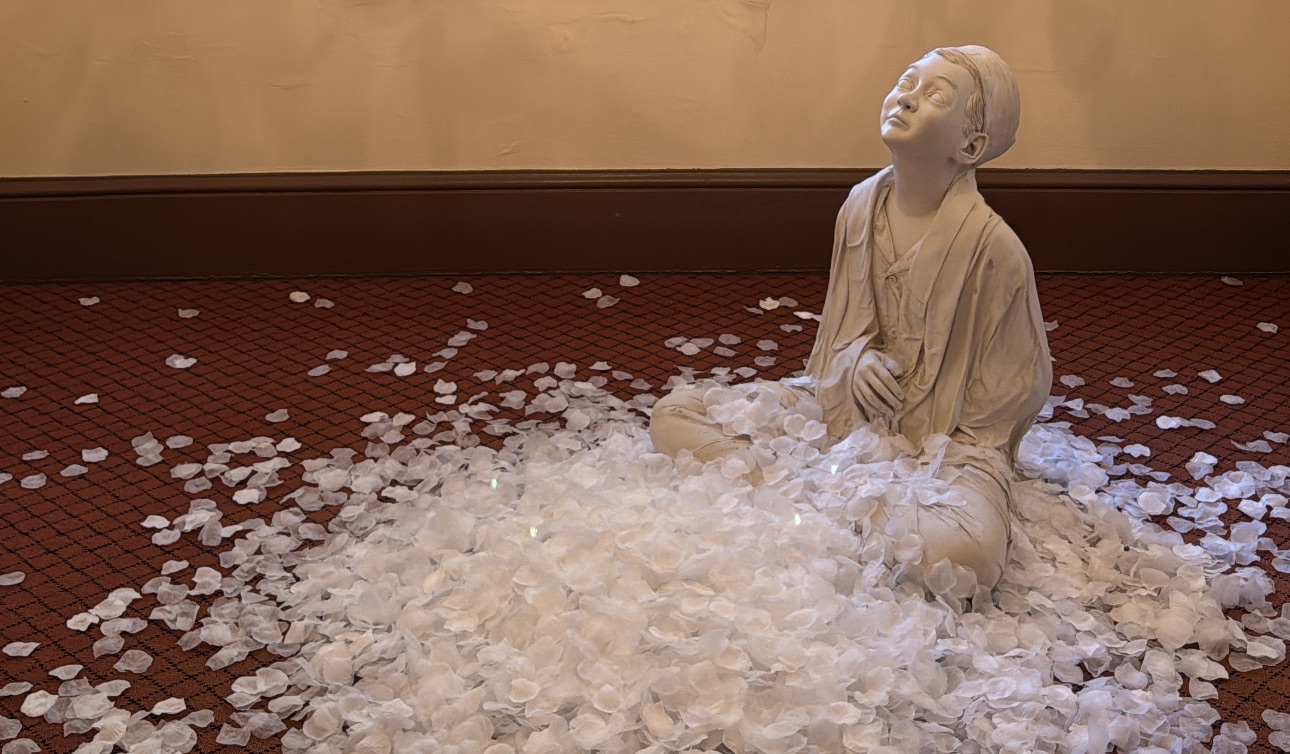
Sculptural artist Abdul-Rahman Abdullah’s work in Room 25 was another point of distinction – so compelling, in fact, that I found myself returning to it again and again as the night unfolded. The room carried a quiet intensity, anchored by an eerie, ghost-like sculpture of a young boy gazing upward toward an ornate chandelier suspended above him. His expression, part innocence, part longing, created a powerful emotional charge that drew me in slowly. Beneath him, the floor was blanketed in white rose petals, their pale softness amplifying the stillness of the scene and adding a sense of ritual or remembrance. The contrast between the delicate petals and the poised figure heightened the room’s sense of mystery, as though time itself had paused to honour some unspoken moment. Visually striking and emotionally loaded, Abdullah’s installation was mesmerising – one of those rare spaces where you felt compelled not just to look, but to stand quietly and feel.
I too had the privilege of stepping inside and being part of the artwork that weekend, as a guest at Tom Mùller’s Room 13 Supper Club, an immersive component of the Room Service installation that transformed the act of dining into a work of art. For those born on the 13th of the month, the room became a stage for a truly immersive art experience – 13 guests, born on the 13th day, gathered to enjoy a 13-course dinner, exquisitely prepared by French chef, Nicolas Dreyfus, whose cuisine was as much a work of art as the installation itself. Elegant French décor, wax-dripped candles, exquisite service and carefully curated wines and spirits created an atmosphere that was both intimate and theatrical. I especially loved how guests interpreted the dress code, black with accents of white, with playful sophistication – noir lace, noir silk, crisp blazers, white pearls and white silk bows, each outfit a reflection of individual style and collective creativity.
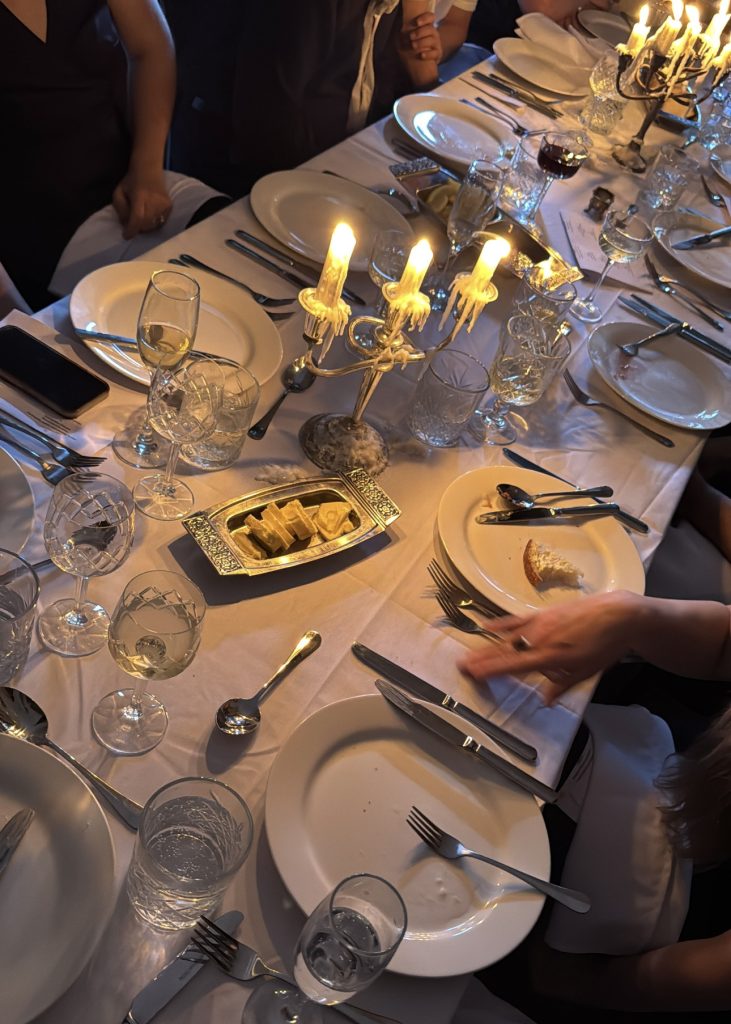
What made the Room 13 Supper Club truly an installation was the interplay between participants, space and sensory detail. Titles, hierarchies and expectations were left at the door; while introductions, conversation, laughter and sophisticated banter flowed freely. Every gesture, every toast, every interaction became part of the art, a fleeting choreography of participation that transformed the dinner into more than a meal – it was a shared performance, an exploration of ritual, chance and connection within the immersive environment of the P&O Hotel. Within the larger Room Service experience, the Room 13 Supper Club exemplified how everyday rituals like eating, dressing and conversing can be elevated to artistic acts, transforming the hotel into a canvas for collective imagination and immersive storytelling.
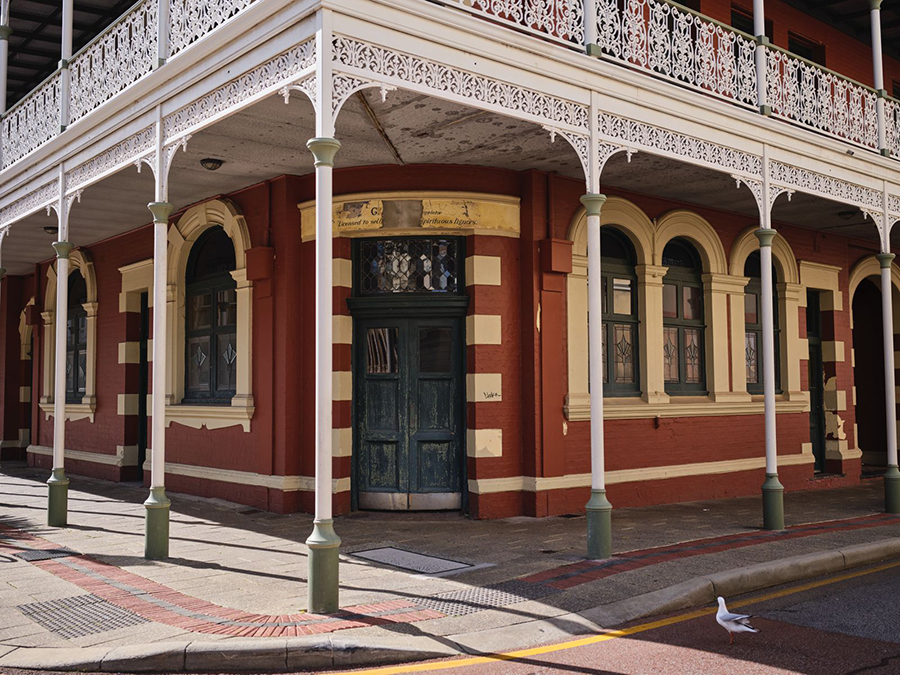
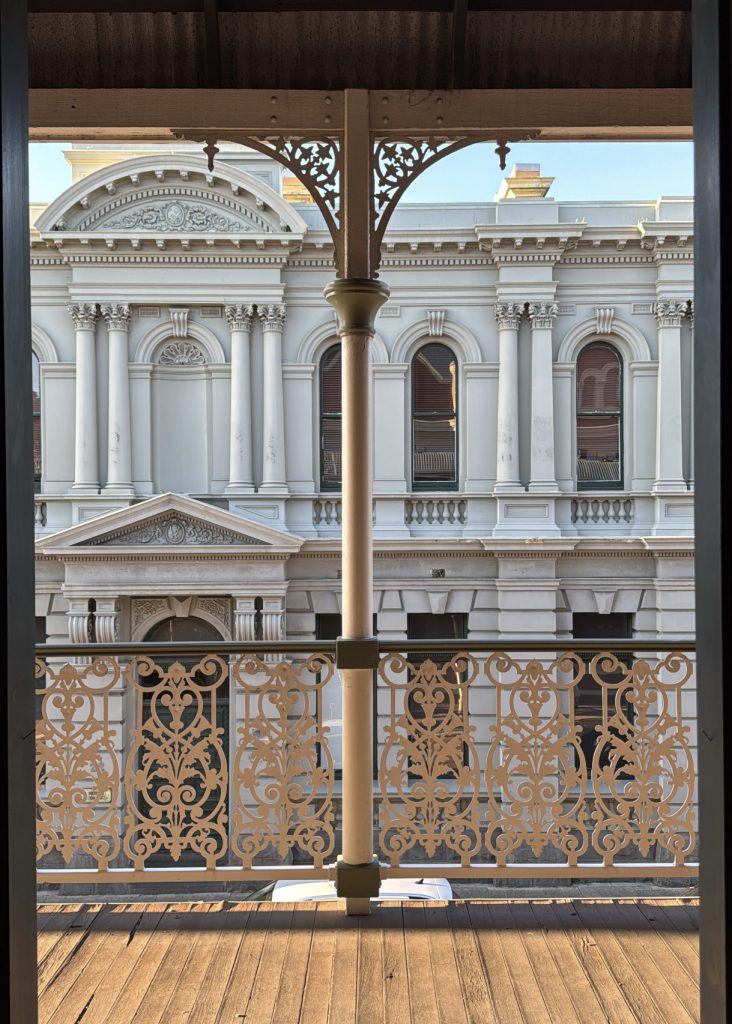
The P&O Hotel itself holds a presence that is impossible to ignore. Built in 1906 in an era when Fremantle’s port pulsed with travellers, sailors and stories, the hotel once served as a waypoint for those arriving by sea, a place where journeys paused, overlapped or quietly unravelled behind closed doors – it has passed through many hands and purposes over the decades, including a period as student accommodation for Notre Dame University. Though its corridors have long been silent, the building has retained a kind of dignified stillness, its walls carrying the soft residue of conversations, footsteps and lives once lived within them.
Today, under the stewardship of its current owners, Nic Trimboli and Adrian Fini, the minds behind Fremantle favourites such as Little Creatures, Bread in Common and Vin Populi, the P&O Hotel is now in the process of restoration and reawakening for Fremantle’s booming tourism scene. But before the renovation began in earnest, Trimboli and Fini entrusted the keys to Tom Mùller and the Fremantle Biennale team, granting full licence to unleash creativity, imagination and a touch of controlled chaos for the festival’s final weekend, turning the building into a living, breathing playground for art.
“Fremantle is a city built on stories and the P&O Hotel is part of that fabric,” Fini tells me. “Supporting the creation of new stories, new perspectives and new experiences, particularly when international art is placed within our own distinctive buildings and spaces, feels important. It stretches us and it helps us see our city with fresh eyes.”
As a long-time supporter of the Biennale, Adrian Fini’s involvement has been instrumental in terms of strengthening it as a cultural icon in Western Australia. “It has been a pleasure to watch the Fremantle Biennale continue to grow into such a significant cultural offering for Western Australia. This year’s program was no exception and with each edition, I find myself appreciating it more.”
For Fini, the weekend was more than just an exhibition – it was a reminder of why projects like Room Service matter. “Room Service was a brilliant activation and several of the works have stayed with me,” he reflects. “Losing our imagination would be the greatest loss of all, so I’ll continue to back the things that keep it alive.” His words capture the essence of the event – a dormant building reawakened, creativity given free rein and a celebration of the imagination as a vital, living force within Fremantle’s cultural landscape.
As the final weekend of SANCTUARY 25 drew to a close, the P&O Hotel carried the echoes of laughter, footsteps and whispered conversations through its corridors. Artists, performers, staff and visitors had filled its rooms with imagination, spontaneity and a shared experience, transforming everyday rituals into acts of art. At every turn, I ran into familiar faces from the Fremantle community, including a whole family volunteering over different aspects during the event – a warm reminder of the collective effort that made the weekend possible and a pleasant, community thread woven throughout the experience. For a few magical hours, the P&O Hotel was no longer just a building – it was a living, breathing Wonderland, a reminder that Fremantle’s cultural heartbeat can surprise and delight at every turn. Thank you to everyone who took part in, attended and contributed to the wonderful initiative of Room Service – parts of it will forever linger in our minds, and really, what a great legacy that is.
This editorial was created for Fremantle Biennale by Skripture